
 Cladia Vanluxi
Transitioning to using a wheelchair is one of life’s most significant changes, affecting every aspect of your existence: how you move physically, how you perceive yourself, and how others perceive you. Amidst the emotional rollercoaster that often ensues, there’s also the opportunity to reclaim a whole new kind of practical freedom and independence.
A Guide to the New Everyday
Starting to use a wheelchair is a major life adjustment. It’s a change that touches everything: how you move, how you see yourself, and how others see you. But amidst the emotional rollercoaster that often arises, there’s also the possibility of a new kind of freedom.
The Emotional Journey: From Grief to Relief
There’s no “right” way to feel. For many, the initial period involves a grieving process. You might mourn the loss of your previous mobility or feel frustrated with a world that suddenly seems full of obstacles like stairs and high curbs. It’s also common to experience an identity crisis – who am I now when the chair sometimes seems more visible than the person?
At the same time, many experience an unexpected relief. For those who have lived with chronic pain, muscle disease, or extreme fatigue, the wheelchair can be a lifesaver. It conserves energy and offers the chance to go to the movies, meet friends, and participate instead of being isolated at home.
More Than Just a Chair
What often feels heaviest isn’t the chair itself, but the reactions of others. Becoming “invisible” or receiving pitying looks when you’re just out to buy milk can be exhausting. It’s important to remember: The wheelchair is just a tool. Just as glasses help the eyes to see, the wheelchair helps the body to move. With the right adaptations and attitudes, it quickly becomes a natural part of everyday life.
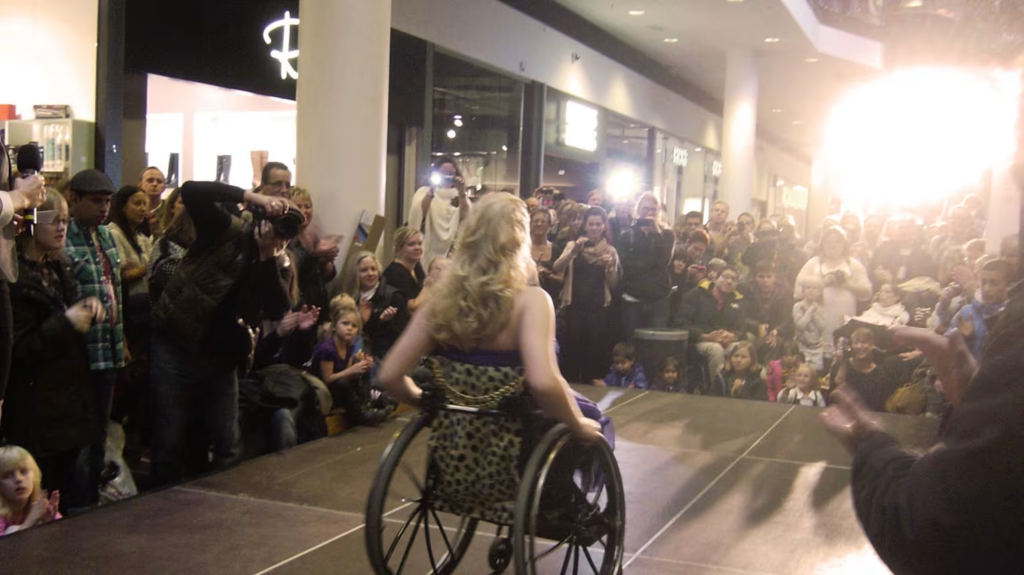
Good to Know: Your Checklist for a Smoother Everyday
If you or someone close to you has recently started using a wheelchair, there are practical steps that can make a big difference in quality of life.
1. The Right to Support and Adaptation
In Sweden, you have the right to extensive support to make everyday life work.
- Home adaptation: You can apply for grants from your municipality to remove thresholds, install ramps, or adapt the bathroom.
- Aids via the Region: Contact your health center to meet with an occupational therapist. They can prescribe wheelchairs, shower chairs, and cushions at a low cost or for rent.
- Active chair vs Standard chair: There’s a big difference between a heavy loaner chair and a custom-made “active chair.” Make sure to get a chair that’s adjusted to your body to protect your shoulders and back.
2. Training and Technique
- Wheelchair technique: It takes technique to tackle curbs or roll in snow. Organizations like RG Aktiv Rehabilitering offer courses that provide a huge confidence boost.
- Physical health: Since arms and shoulders work more, it’s important to do preventive strength training and use a good seat cushion to avoid pressure sores.
3. Smart Home Aids
Here are some of the most appreciated products that increase independence:
- Grabber: To avoid bending down for things.
- One-handed cutting board: A must if you have reduced function in one hand (e.g., after a stroke).
- Threshold ramps: Small rubber wedges that allow you to glide smoothly between rooms.
4. Tips for Loved Ones
- Ask first: Never grab someone’s wheelchair without asking. The chair is part of the person’s personal space.
- Eye level: If you’re going to talk for a while, sit down so you’re on the same level.
- Plan ahead: Check the accessibility of the restaurant or friends’ place before you go to avoid unpleasant surprises.
There are many different reasons a person might use a wheelchair, and it’s important to remember that needs can vary greatly. Some use a wheelchair all the time, while others are “ambulatory wheelchair users” – meaning they can walk short distances but need the chair for longer distances or to conserve energy.
Here are the most common causes divided into categories:
1. Neurological Injuries and Diseases
This involves damage to the nervous system that prevents signals between the brain and muscles from working properly.
- Spinal cord injuries: Often caused by accidents (falls, traffic accidents) or diseases resulting in paralysis.
- Multiple sclerosis (MS): A disease that attacks the central nervous system and can lead to muscle weakness and balance problems.
- Cerebral palsy (CP): A congenital brain injury affecting muscle control and movement.
- Stroke: Can cause paralysis on one side of the body or drastically affect balance.
2. Muscle and Skeletal Diseases
Sometimes it’s not the nerves that are the problem, but the body’s “machinery” itself.
- Muscular dystrophy: A group of genetic diseases where muscles gradually weaken over time.
- Severe osteoarthritis or rheumatism: Severe inflammation and pain in the joints (especially knees and hips) can make walking impossible.
- Brittle bone disease (Osteoporosis): Can lead to fractures requiring wheelchair use during healing or permanently.
3. Congenital Conditions
Some are born with conditions that make the wheelchair a necessary tool for freedom from the start.
- Spina bifida: When the spine doesn’t close completely during fetal development, often leading to paralysis in the legs.
- Osteogenesis imperfecta: Also known as “brittle bone disease,” which makes the skeleton extremely fragile.
4. Acute Injuries and Amputations
- Fractures: In cases of complicated fractures, a wheelchair may be needed during a rehabilitation period.
- Amputations: Loss of one or both legs due to, for example, diabetes, circulatory diseases, or accidents.
“When life rolls on, can it be about finding home in a new reality?”
1. Mobility and Movement
This is the foundation for the person to regain their freedom and move around their home and community.
- Wheelchair (Manual or Electric): The choice depends on the person’s strength and balance. If one side of the body is paralyzed (hemiplegia), a manual wheelchair can be equipped with “one-hand drive.” When energy or balance is reduced, an electric wheelchair is often necessary.
- Specialized cushion: Very important for preventing pressure sores, especially if the person has reduced sensation or difficulty changing position independently.
- Sliding board or Turntable: Facilitates transfers between wheelchair and bed, sofa, or toilet by reducing friction and strain for both the user and relatives.
2. Home Adaptations
The home often needs to be reviewed so the person can be as active as possible without obstacles.
- Threshold ramps: To allow the wheelchair to roll smoothly between rooms.
- Grabber (Grabber stick): Since it’s difficult to bend down from a wheelchair, this helps pick up items from the floor or reach objects on shelves.
- Automatic door opener: If the person has difficulty opening heavy doors with one hand while maneuvering the wheelchair.
3. Bathroom and Personal Hygiene
Here, safety is prioritized to avoid falls.
- Shower chair or stool: Allows safe sitting during washing.
- Toilet seat riser with armrests: Makes it significantly easier to sit down and get up, as wheelchair users often have a lower sitting height than a standard toilet.
- Support handles: Strategically placed on walls for stability during transfers.
4. Kitchen and Meals
After a stroke, fine motor skills may be impaired, making cooking and eating challenging.
- One-handed tray or rolling table: To transport food and drink when hands are needed to drive the wheelchair.
- Cutlery with thick grips: Helps if the hand is weak or trembling.
- Plate edge and non-slip mat: Prevents food from sliding off the plate and the plate from sliding on the table.
- One-handed cutting board: Has spikes to hold items like an onion or bread slice so you can cut with one hand.
5. Communication and Cognition
If the stroke also affected speech (aphasia) or memory, cognitive support is needed.
- Picture board or communication apps: To express needs when words aren’t enough.
- Digital reminder aids: For medications and appointments, as brain fatigue is common after a stroke.
How to Get the Aids?
In Sweden, you typically go through your occupational therapist or physiotherapist at the health center or rehabilitation clinic. They assess your needs and help you try out the right equipment.
Important to remember: The need for aids often changes over time as rehabilitation progresses. What you need right after discharge might not be the same as what you need a year later.
There are several ways to obtain aids, either by purchasing them yourself through specialized stores or by going through the Region/Municipality to get them prescribed (often at a much lower cost or for rent).
Here is a guide to where you can turn and approximate prices for common products.
Price Guide & Shopping Locations (for Private Purchase)
If you want to buy your own complementary aids, there are stores like Keepon.se, Varsam.se, and Rehaboteket.se.
Note that prices are approximate and may vary depending on brand and current promotions.
Shopping List: “Must-Have” Aids
| Product | Purpose | Approx. Price | Example Store / Link |
| Grabber | Reach items on the floor or shelves without bending. | 150 – 400 SEK | Keepon.se / Apoteket.se |
| Shower stool / chair | Provides stability and safety in wet areas. | 500 – 1,500 SEK | Tryggahjalpmedel.se / Keepon.se |
| Toilet seat riser | Makes it easier to sit and stand. | 600 – 2,000 SEK | Varsam.se / Euforia.se |
| Pressure-relieving cushion | Prevents sitting and pressure sores (very important!). | 500 – 3,000 SEK | Senior24.se / Varsam.se |
| One-handed cutting board | For cooking with one hand (spikes hold the food). | 600 – 1,200 SEK | Hjalpmedel.com / Varsam.se |
| Threshold ramps | Allows the wheelchair to roll smoothly between rooms. | 300 – 1,000 SEK | Keepon.se |
Tips Before You Order:
- Measure carefully: Before buying a toilet seat riser or wheelchair cushion, measure your current toilet seat or wheelchair seat to ensure the dimensions match.
- Check shipping: Many of these stores offer free shipping if you spend over a certain amount (often around 1,000–1,500 SEK).
- The Region’s offerings: As mentioned earlier, double-check with your occupational therapist first. Many of these items (especially more expensive cushions and wheelchairs) can be borrowed almost for free through healthcare.
Important: Before purchasing expensive equipment privately, always go through your occupational therapist. This ensures you get the right ergonomics and often saves you thousands.